
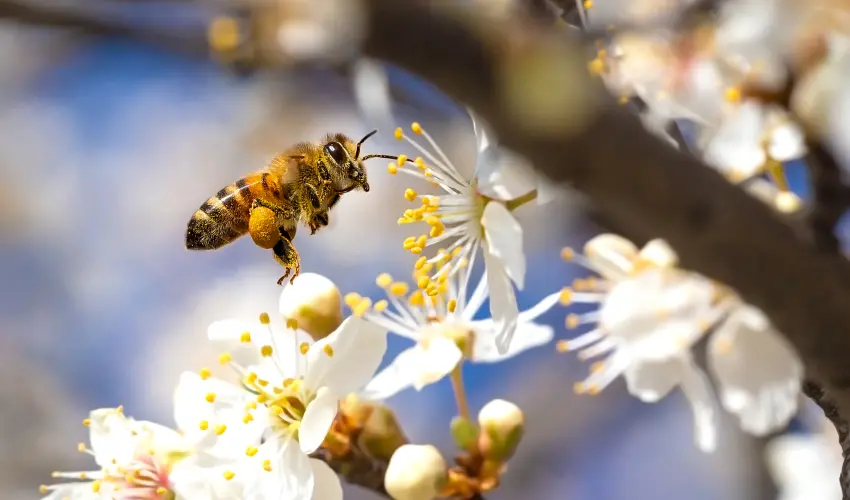
The Pacific Northwest is home to a variety of stinging insects that become increasingly active as temperatures rise. From beneficial bees to defensive wasps, hornets, and yellow jackets, each species has its own appearance, nesting habits, and behavior. While many insects are harmless when left undisturbed, nests located near people can quickly become a concern.
Knowing how to identify common stinging insects is the first step toward protecting your family and your property. Below, you’ll learn about the species you’re most likely to encounter and when professional pest control may be the best option.
What Is the Difference Between Bees, Wasps, and Hornets?
Although they all belong to the same insect family, bees, wasps, and hornets have several distinct characteristics that make them easy to tell apart once you know what to look for. The following list highlights some of their most noticeable differences:
- Bees: Bees have fuzzy, rounded bodies that help them collect pollen as they move from flower to flower. They are important pollinators and are generally non-aggressive, stinging only when they feel threatened.
- Wasps: Wasps have smooth, slender bodies with narrow waists and long legs. They feed on other insects, making them beneficial predators, but they will defend their nests if they perceive danger.
- Hornets: The largest type of social wasp found in many areas. They construct enclosed paper nests in trees, shrubs, and on structures, and they can become highly aggressive when their nest is disturbed.
- Yellow Jackets: Yellow jackets are compact wasps with bold yellow-and-black markings. They are well known for nesting underground or inside wall voids and can become especially aggressive while protecting their colony or searching for food.
Common Bees, Wasps, and Hornets
Several species are commonly found throughout the Pacific Northwest. Understanding their appearance and nesting habits makes identification easier:
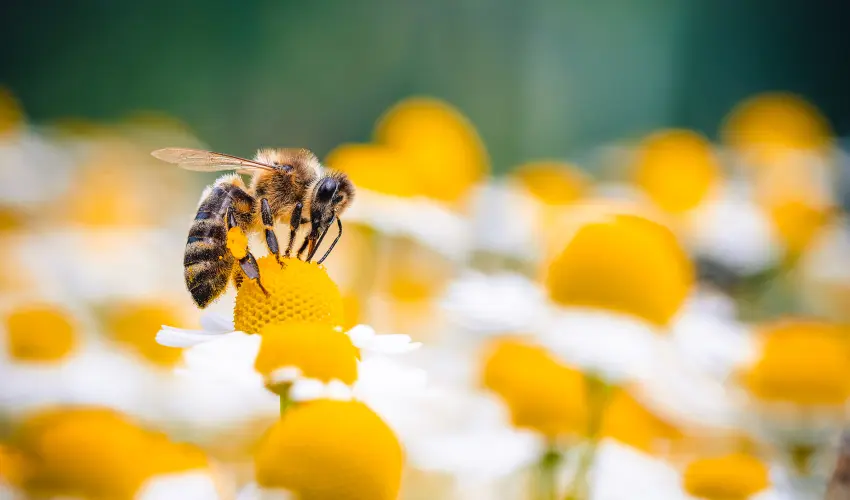
Honey Bees
Honey bees are golden brown with fuzzy bodies and are one of the region’s most important pollinators. They typically build wax combs inside hollow trees, wall voids, or managed beehives.
- Nest: Wax combs hidden inside cavities.
- Danger Level: Low unless the hive is disturbed.
- Aggressive?: Generally no.
- Property Concern: Usually minimal unless they establish a colony inside a structure.
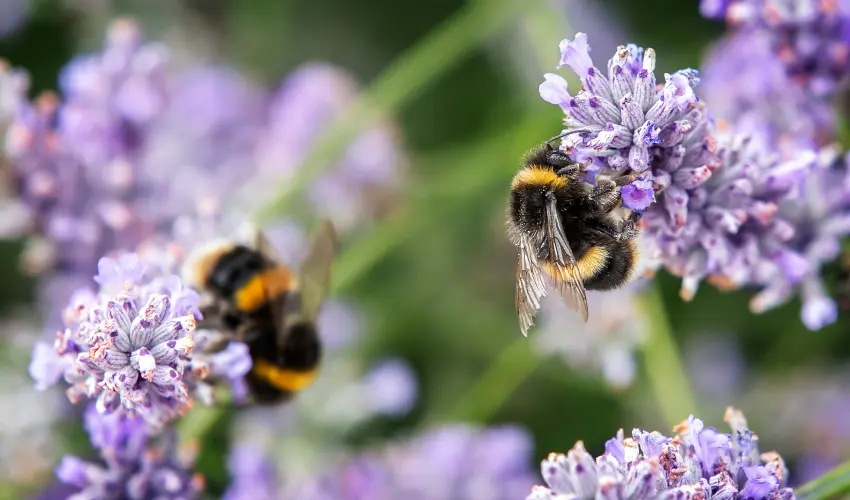
Bumble Bees
Bumble bees are larger and hairier than honey bees, often with black and yellow bands. They commonly nest underground or beneath landscape features.
- Nest: Underground burrows, compost piles, or thick vegetation.
- Danger Level: Low.
- Aggressive?: Usually calm unless protecting their colony.
- Property Concern: Beneficial pollinators that rarely require removal.
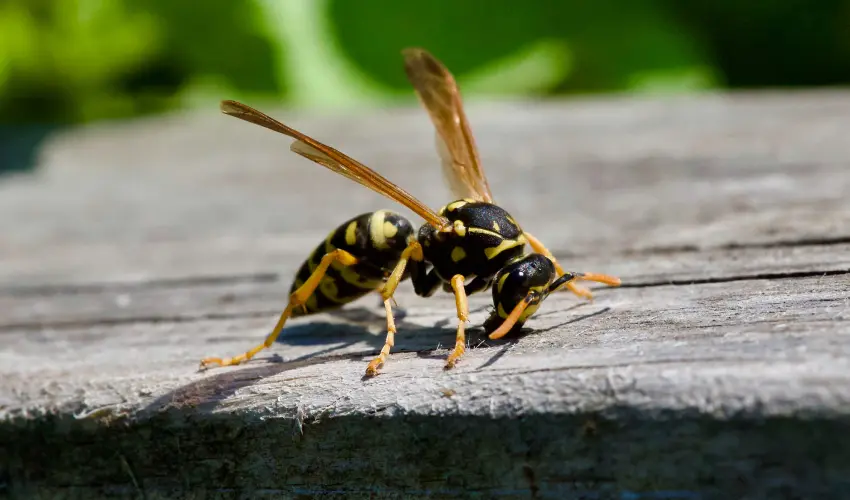
Paper Wasps
Paper wasps have long legs and slender bodies with reddish-brown or yellow markings. Their open, umbrella-shaped nests are commonly found beneath eaves, decks, railings, and outdoor structures.
- Nest: Small exposed paper comb.
- Danger Level: Moderate.
- Aggressive?: Defensive when nests are approached.
- Property Concern: Can build nests around frequently used outdoor spaces.
Yellow Jackets
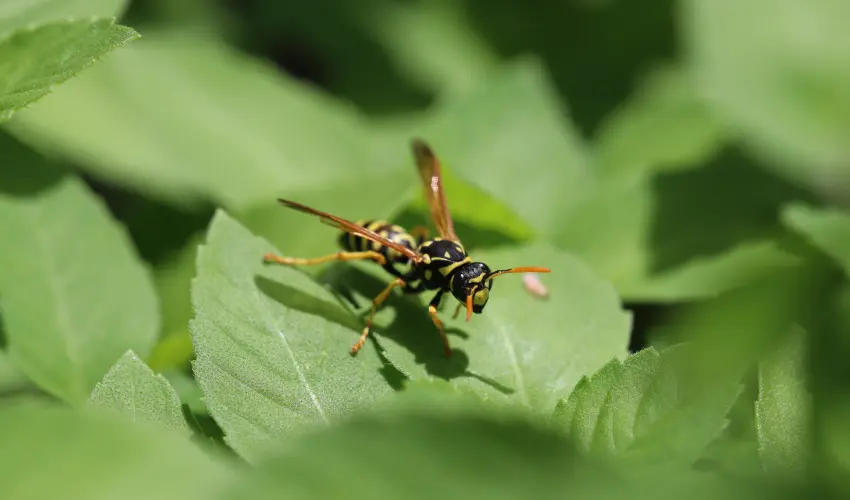
Yellow jackets are among the most troublesome stinging insects in the Pacific Northwest. They often nest underground but may also use wall voids or attics.
- Nest: Underground burrows or hidden cavities.
- Danger Level: High.
- Aggressive?: Yes, especially during late summer and fall.
- Property Concern: Large colonies can contain thousands of workers capable of stinging multiple times.
Bald-Faced Hornets
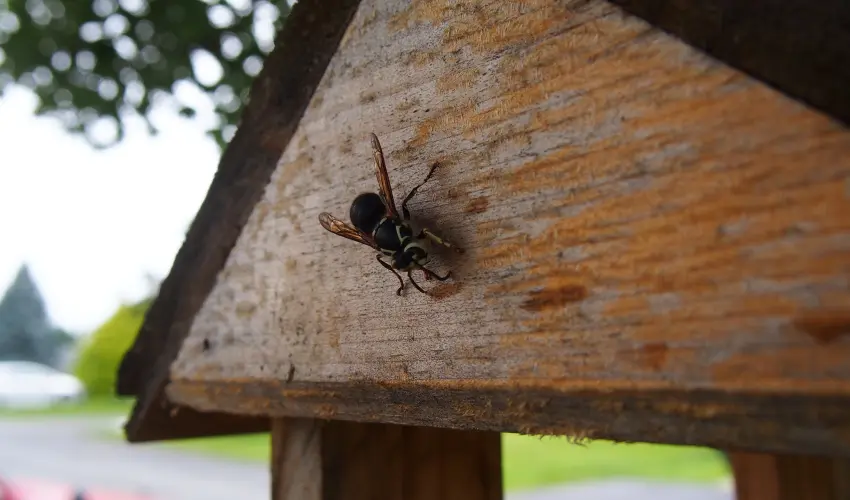
Despite their name, bald-faced hornets are actually large wasps. They build distinctive gray paper nests that hang from trees, shrubs, or buildings.
- Nest: Large enclosed paper nest.
- Danger Level: High.
- Aggressive?: Very protective of their nest.
- Property Concern: Nests located near entrances, patios, or play areas should be professionally evaluated.

What About Murder Hornets?
The nickname “murder hornet” refers to the Asian giant hornet, the world’s largest hornet. It can grow to nearly 2 inches long and has a large orange head, prominent eyes, and a striped orange-and-black abdomen. This invasive species gained widespread media attention because it can attack and destroy entire honey bee colonies and has a powerful, painful sting.
Although sightings in the Pacific Northwest have been extremely rare and eradication efforts have greatly reduced known populations, homeowners are far more likely to encounter yellow jackets or bald-faced hornets.
How to Look for Stinging Insects Around Your Property
Many nests go unnoticed until insect activity increases. Performing occasional inspections around your property can help you spot problems early. Look for these common warning signs:
- Repeated Insect Activity: If you regularly see bees, wasps, or hornets flying in the same area, there may be a nearby nest or colony.
- Entry Into Small Openings: Watch for insects repeatedly entering and exiting small holes in siding, foundation gaps, underground burrows, or other openings around your property.
- Paper Nests in Trees or Rooflines: Large, gray paper nests hanging from tree branches, shrubs, or roof overhangs often indicate the presence of hornets or other social wasps.
- Exposed Comb Nests: Small, open comb nests attached beneath eaves, decks, railings, or porch ceilings are commonly built by paper wasps.
- Heavy Activity Around Food Sources: Increased numbers of stinging insects around garbage cans, outdoor eating areas, pet food, or fallen fruit may signal a nearby yellow jacket or wasp nest.
- Buzzing Inside Structures: Buzzing sounds coming from walls, attics, sheds, crawl spaces, or other enclosed areas may indicate a hidden nest inside the structure.
Do’s and Don’ts When You Find a Nest
Every stinging insect situation is different, and your response should depend on the type of insect and where it has established its nest. Taking the wrong approach can increase the risk of stings. Keep these do’s and don’ts in mind before taking action:
Do:
- Identify the insect from a safe distance.
- Keep children and pets away from active nests.
- Observe where insects are entering and exiting.
- Wear protective clothing if inspecting your property.
- Contact a professional if the nest is large or difficult to access.
Don’t:
- Swat at flying insects.
- Spray a large nest without proper protective equipment.
- Block nest entrances before treatment.
- Disturb underground nests.
- Attempt to remove nests from roofs, trees, or wall voids yourself.
Can You Remove Bees, Wasps, or Hornets Yourself?
Small, newly formed paper wasp nests may sometimes be treated using products specifically labeled for wasps if all label directions are followed and the nest is easily accessible. However, DIY removal becomes much riskier when dealing with yellow jackets, hornets, or nests hidden inside structures. Professional stinging insect control is strongly recommended when:
- The nest is inside a wall, attic, or crawl space.
- The colony is large.
- The insects are highly aggressive.
- Anyone in the household has a bee or wasp sting allergy.
- The nest is located near doors, walkways, or children’s play areas.
- You are unable to positively identify the insect.
Professional Bee, Wasp, and Hornet Control with Deep Roots Pest and Wildlife Innovations
At Deep Roots Pest and Wildlife Innovations, we know that every stinging insect situation is different. Whenever possible, we encourage protecting beneficial bees, but when wasps, hornets, or yellow jackets create a hazard, our team can provide professional solutions tailored to your property.
If you’re seeing increased stinging insect activity or have found a nest around your home in the Vancouver, WA, or Portland, OR area, we’ll perform a thorough inspection, identify the insect, and recommend the most appropriate course of action. Acting early can help prevent painful stings and larger infestations.
When stinging insects become a problem around your property, contact Deep Roots Pest and Wildlife Innovations to receive expert guidance and effective pest control solutions.