
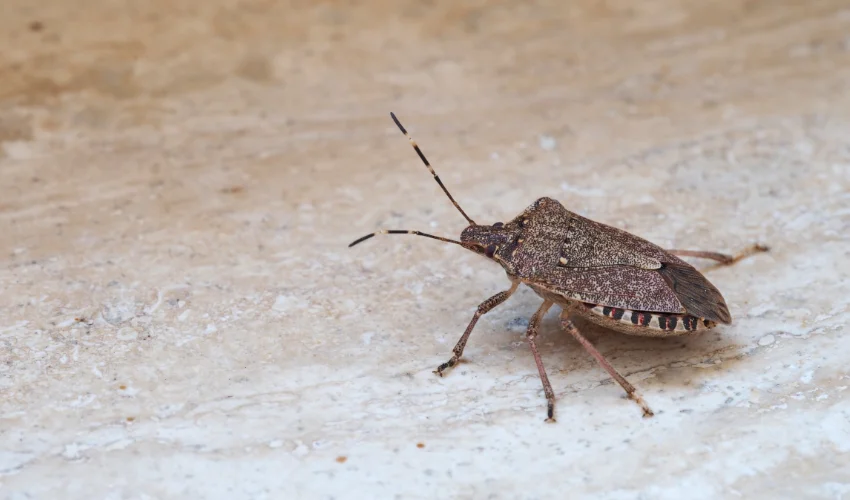
Stink bugs are a familiar nuisance throughout the Pacific Northwest, particularly during the fall and winter when cooler temperatures drive them indoors in search of warmth. Homeowners in Vancouver WA and Portland OR and nearby communities often find these insects gathering around windows, doors, and other potential entry points.
The Brown Marmorated Stink Bug is the species most commonly responsible for these infestations. Although they are not considered dangerous to people or pets, they can become a significant nuisance when they invade homes in large numbers. Deep Roots Pest and Wildlife Innovations, LLC offers professional stink bug control services to eliminate infestations and help prevent future invasions.
What Are Brown Marmorated Stink Bugs?
Stink bugs are named for the unpleasant odor they release when they are crushed or disturbed. The Brown Marmorated Stink Bug is an invasive species that has spread throughout much of the United States, including the Pacific Northwest. While they are mainly a nuisance pest indoors, they can also damage plants, fruits, vegetables, and crops.
Adult Brown Marmorated Stink Bugs have a shield-shaped body that is about ½ to ¾ inch long. They are brown or grayish-brown with a mottled pattern on their back. They can be identified by the alternating light and dark bands on their antennae and along the edges of their abdomen.
During warmer months, these pests feed outdoors on plants, fruits, vegetables, and crops. Brown Marmorated Stink Bugs damage plants by removing their juices, which can cause scarring, discoloration, deformities, and damaged produce.
As temperatures cool, Brown Marmorated Stink Bugs search for warm, protected areas to spend the winter. Homes, garages, attics, and other structures often provide ideal shelter, leading to large numbers gathering around buildings and moving indoors.
Common Stink Bug Species in the Pacific Northwest
There are dozens of stink bug species found throughout North America, and several can be encountered in the PNW. While the Brown Marmorated Stink Bug is the species most often associated with indoor infestations, other stink bugs in the region may also become a nuisance around homes, gardens, and landscapes.
Some of the most common stink bug species found in the PNW include:
- Consperse Stink Bug (Euschistus conspersus): Native to the western United States, this stink bug has a brownish-gray appearance and is often found feeding on fruits, vegetables, and crops.
- Rough Stink Bug (Brochymena species): These native stink bugs have a rough, textured appearance that helps them blend into tree bark and are commonly found outdoors on trees and shrubs.
- Green Stink Bug (Chlorochroa species): Green stink bugs are typically bright green or yellowish-green and are commonly found feeding on a variety of plants, fruits, and vegetables throughout the region.
- Brown Marmorated Stink Bug (Halyomorpha halys): This invasive species is the most common stink bug concern for homeowners and is recognized by its brown, mottled coloring, shield-shaped body, and tendency to enter homes during cooler months.
Signs You Have a Stink Bug Problem
Stink bugs are usually easy to notice because they tend to gather in visible areas rather than remaining hidden. Seeing one or two may not indicate a major infestation, but repeated sightings often mean they are entering through small openings around your home.
Common signs of stink bugs include:
- Frequent Indoor Sightings: Finding live or dead stink bugs around windows, walls, ceilings, or light fixtures is one of the most common signs that these pests have entered your home.
- Clusters Around Your Home’s Exterior: Stink bugs often gather in large numbers on sunny walls, windows, and doors before squeezing through small gaps to get inside.
- A Lingering Unpleasant Odor: When disturbed, handled, or accidentally crushed, stink bugs release a strong odor as a natural defense mechanism.
- Visible Plant Damage: Brown Marmorated Stink Bugs feed on a wide variety of fruits, vegetables, and ornamental plants, leaving behind damaged, discolored, or scarred plant tissue.
Are Stink Bugs Dangerous?
Stink bugs are considered a nuisance pest rather than a dangerous insect. They do not bite people, sting, spread diseases, or cause structural damage to homes. They are also not known to harm pets.
However, they can create several problems for homeowners and gardeners. Large numbers inside a home can be difficult to remove, and their odor can be unpleasant when they are crushed. Outside, Brown Marmorated Stink Bugs can damage certain fruits, vegetables, ornamental plants, and crops by feeding on plant tissue.
Other Bugs Mistaken for Stink Bugs
While the Brown Marmorated Stink Bug is the most common concern in the Pacific Northwest, other insects can sometimes be mistaken for it. Seed bugs, including species such as boxelder bugs and related plant-feeding insects, may look similar and can also become a seasonal nuisance when they gather around homes.
Proper identification is important because different pests may require different treatment approaches. A professional stink bug exterminator can help determine which insect is causing the problem and recommend the best solution.
How to Get Rid of Stink Bugs
A few stink bugs can often be removed by vacuuming them up or gently relocating them outside. However, when these pests invade your home in larger numbers, professional treatment may be necessary to control the infestation.
At Deep Roots Pest and Wildlife Innovations, LLC, our stink bug control solutions include:
- Inspection of Entry Points: Identify the cracks, gaps, and openings that stink bugs use to enter your home.
- Exterior Treatment: Apply targeted treatments to areas where stink bugs commonly gather before moving indoors.
- Exclusion Services: Reduce access by sealing or addressing potential entry points around the home’s exterior.
- Customized Treatment Plan: Develop a stink bug control strategy based on the size of the infestation and your property’s specific needs.
Avoid crushing stink bugs whenever possible, as this can release their strong odor and make cleanup more difficult.
How to Prevent Stink Bugs
The best way to prevent stink bugs from invading your home is to make it more difficult for them to enter. These pests can squeeze through surprisingly small openings while searching for a protected place to overwinter.
Homeowners can help reduce stink bug activity by:
- Sealing cracks and gaps around windows, doors, siding, and utility openings.
- Repairing damaged screens on windows, vents, and doors.
- Installing or replacing weather stripping around entry doors.
- Reducing outdoor hiding areas near the home.
- Inspecting plants, outdoor furniture, and stored items before bringing them indoors.
Professional Stink Bug Control in the Pacific Northwest
Although stink bugs are not dangerous, dealing with large numbers of them can be frustrating. If Brown Marmorated Stink Bugs or similar pests are becoming a recurring problem around your home, Deep Roots Pest and Wildlife Innovations, LLC can help.
Our experienced team provides professional stink bug control services throughout Vancouver WA and Portland OR, and the surrounding Pacific Northwest. We can identify the pest, locate potential entry points, and develop a solution to help protect your home from unwanted insect activity.
For reliable stink bug control in the Pacific Northwest, contact Deep Roots Pest and Wildlife Innovations, LLC today.