
Key Takeaways
- The Pacific Northwest is home to many spider species, and most are harmless to people and pets.
- Common PNW spiders often enter homes while searching for food, shelter, or protection from changing weather conditions.
- Identifying webs, hiding locations, and spider behavior can help answer questions like “what spider is in my home?”
- Seeing spiders indoors may indicate other insect activity since spiders often follow available food sources.
- Professional spider control can help reduce recurring spider problems and address conditions attracting them.
Discovering a spider inside your home can be concerning, especially when you are unsure of the species or whether it could be harmful. Homeowners searching “what spider is this” or “what spider is in my home” are often relieved to learn that most common spiders of the PNW are harmless and primarily considered nuisance pests.
Although spiders can help reduce other insect populations, repeated sightings may mean your home offers the food, moisture, and shelter they need to thrive. Deep Roots Pest and Wildlife Innovations, LLC provides professional spider control services for homes throughout Vancouver WA and Portland OR.
Common PNW Spiders Found Around Homes
Many different spider species live throughout the Pacific Northwest, and some may make their way into homes while searching for food, shelter, or protection. Understanding their characteristics and habits can help you recognize these common spiders around your property:
Common House Spider
Common house spiders are small, web-building spiders frequently found indoors in corners, closets, garages, basements, and other undisturbed areas. They create irregular cobwebs where insects may become trapped.
These spiders are usually about ⅛ to ¼ inch long and typically have a round abdomen with yellowish-brown, gray, or tan coloring and darker markings on their body and legs.
Hobo Spider
Hobo spiders are commonly found near foundations, crawl spaces, garages, sheds, and other low areas around homes. They create funnel-shaped webs and prefer dark, protected locations where they can remain hidden. Despite an old myth, hobo spiders are not considered dangerous to humans.
They are generally ¼ to ½ inch long (not including their legs) and have a brown body with lighter markings and banded patterns on their legs.
Wolf Spider
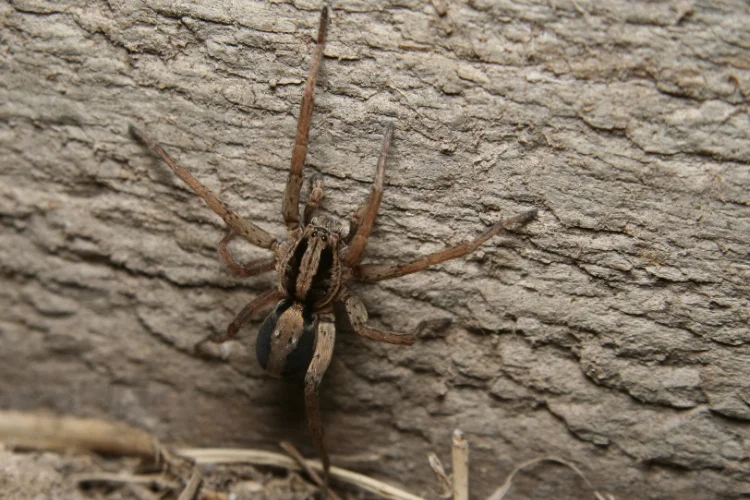
Wolf spiders are active hunters that do not rely on webs to catch their prey. They are often found outdoors in gardens, landscaping, under rocks, and near structures but may enter homes through cracks and openings while searching for shelter.
These spiders are typically ¼ to over 1 inch long depending on the species and have a hairy body with brown, gray, or tan coloring and darker stripes or markings that help them blend into their surroundings.
Grass Spider
Grass spiders build funnel-shaped webs in lawns, shrubs, ground cover, landscaping, and around the exterior of homes. They may occasionally move indoors when looking for protection from changing weather conditions.
These spiders are usually ¼ to ½ inch long (with legs extending their overall size) and have a brown or grayish-brown body with dark stripes running along the top of their abdomen and cephalothorax.
Jumping Spider
Jumping spiders are small, active hunters often seen on walls, windows, fences, and outdoor surfaces. Unlike web-building spiders, they use their strong vision and quick movements to locate and capture prey.
Most jumping spiders are ⅛ to ½ inch long and can vary widely in appearance, with black, gray, brown, or brightly colored bodies and often noticeable patterns or markings.
Yellow Sac Spider
Yellow sac spiders are hunting spiders that may be found indoors and outdoors, often hiding in corners, ceilings, vegetation, and other sheltered areas during the day. They become more active at night while searching for prey.
These spiders are typically ¼ to ⅜ inch long and have a pale yellow, cream, or light greenish body with darker brown markings near the mouthparts and slightly darker legs.
Black Widow Spider
Black widow spiders are less commonly encountered than many other PNW spiders, but they may be found in dark, protected areas such as wood piles, garages, sheds, crawl spaces, and outdoor structures. They create irregular webs and should not be handled due to their medically significant bite.
Female black widows are usually about ⅜ to ½ inch long (with legs extending their overall size) and have a shiny black body with a rounded abdomen and a red or orange hourglass-shaped marking on the underside.
Are These Spiders Dangerous?
Most PNW spiders are not considered dangerous to people, pets, or property. In many cases, these spiders are simply nuisance pests that enter homes while searching for shelter or food. In fact, many spiders are beneficial because they feed on flies, mosquitoes, ants, and other insects around your home.
However, some spider species may bite if they feel threatened or are handled. Although spider bites are uncommon, homeowners should avoid disturbing unknown spiders or reaching into areas where spiders may be hiding.
Spiders do not damage the structure of your home. Their presence is often a sign that they have access to food sources and protected areas where they can survive. Professional spider control can help determine why spiders are present and provide targeted solutions to help prevent future activity.
Where Do Spiders Hide?
Most spiders prefer dark, sheltered areas where they can build webs, hunt insects, and stay protected from activity. Understanding where spiders hide can make it easier to identify why they are appearing around your home. Around the Pacific Northwest, common spider hiding places include:
- Basements, Crawl Spaces, and Garages: These quiet, low-traffic areas provide spiders with shelter, protection, and opportunities to find insects for food.
- Corners, Closets, and Storage Areas: Dark, undisturbed spaces are common locations where spiders build webs and remain hidden.
- Window Frames and Doorways: Spiders may gather near entry points where insects often enter and where they can find places to create webs.
- Under Furniture and Appliances: Hidden areas beneath furniture and appliances can provide spiders with protection from disturbances and access to nearby prey.
- Wood Piles, Sheds, and Landscaping Areas: Outdoor structures and landscaping features offer ideal hiding spots for spiders searching for shelter and insects.
- Cracks, Gaps, and Other Sheltered Locations: Small openings around your home can provide spiders with protected areas to hide and remain undisturbed.
The appearance of a spider’s web can often help with identification. Funnel webs are commonly linked to grass spiders, while irregular cobwebs are typically created by house spiders.
Do Spiders Mean You Have Other Pests?
Seeing a spider in your home does not always mean you have a major infestation. However, spiders rely on insects as a food source, so frequent spider activity may indicate that other pests are present around your property.
If you regularly find spiders, webs, or egg sacs, it may be a sign that additional insects are attracting them. Addressing the underlying pest activity through proper spider prevention and professional pest control can help reduce the conditions that allow spiders to thrive.
Professional Spider Control in Vancouver WA and Portland OR
Although most spiders are not dangerous, repeated spider activity can be difficult to manage without addressing the reasons they are present. Deep Roots Pest and Wildlife Innovations, LLC works with homeowners to identify spider problems, find common hiding areas, and develop effective solutions to help reduce future activity. We take a thorough approach to help protect your home from recurring spider issues.
If you are wondering what spider is in your home or need help with ongoing spiders in the Pacific Northwest, our knowledgeable team provides the professional support needed to address your concerns.
Contact Deep Roots Pest and Wildlife Innovations, LLC today for reliable spider control services in Vancouver WA and Portland OR.