
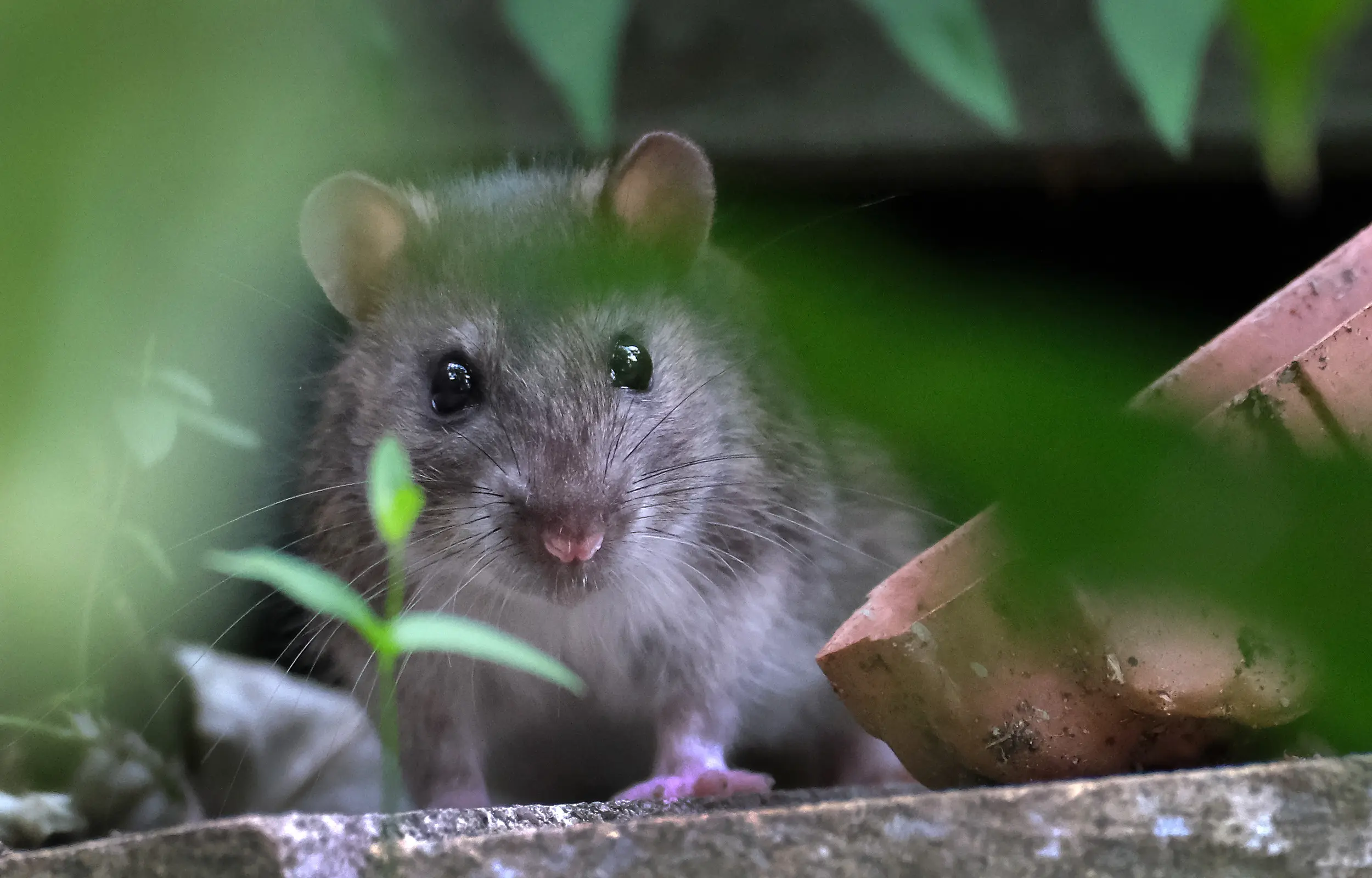
Discovering a rat around your home can raise questions about what kind of rat you are seeing and where it may be coming from. Norway Rats and Roof Rats are the two species most commonly encountered in the Pacific Northwest. Although they can look similar at first glance, the two species differ in appearance, behavior, and the types of locations they tend to use.
Deep Roots Pest and Wildlife Innovations provides professional rat control throughout the Portland and Vancouver areas. Identifying which species is present can offer clues about where rats may be nesting, traveling, and accessing your home.
How to Identify a Norway Rat
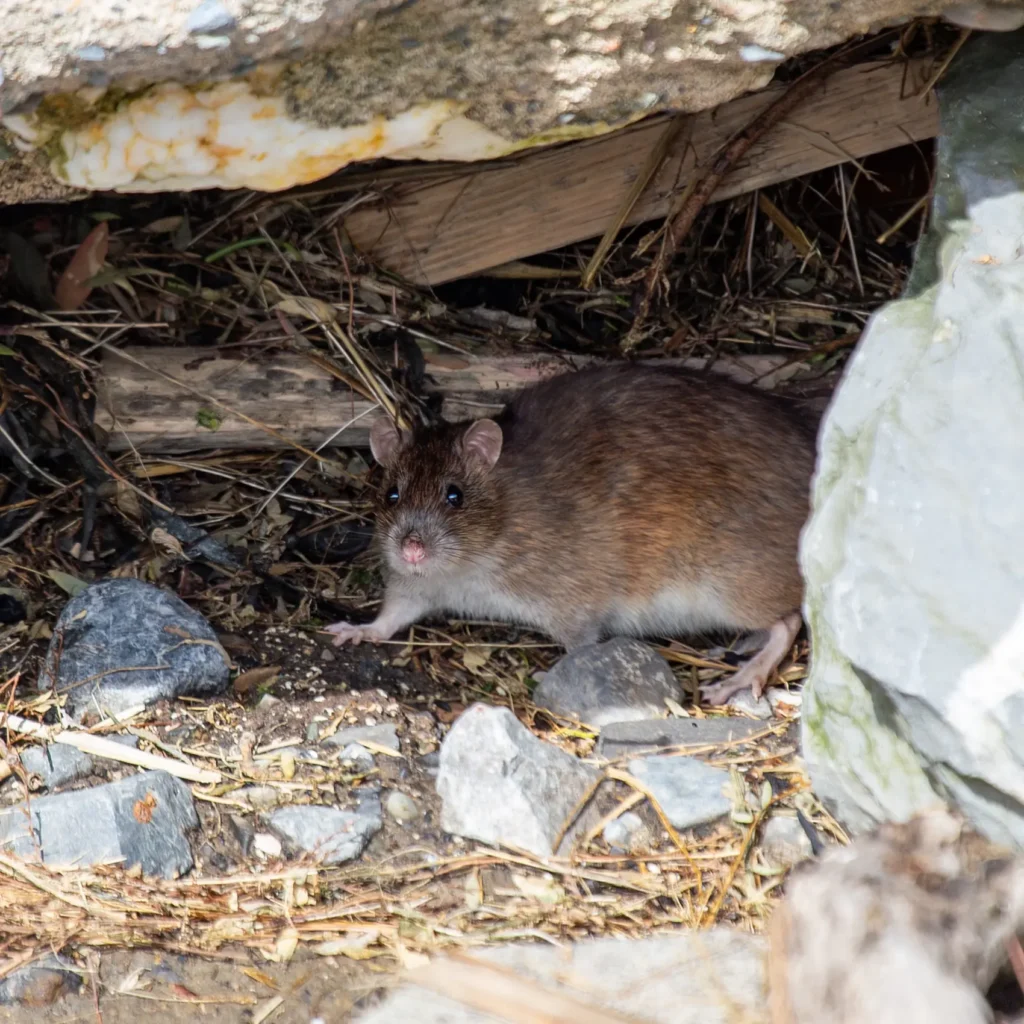
Norway Rats (Rattus norvegicus) have a noticeably heavier and stockier build than Roof Rats. A typical adult measures approximately 7 to 10 inches from the nose to the base of the tail, with a total length of about 13 to 18 inches including the tail. They have rounded or blunt snouts, relatively small ears and eyes, and tails that are shorter than their head and body combined. Their fur is usually brownish or grayish brown, although individual rats can have different coloring.
These rats tend to favor areas at or near ground level. Norway Rats may dig burrows along foundations, under sheds, beneath woodpiles and debris, or in other sheltered spaces. They may also move into crawl spaces, basements, garages, and other lower areas of a building.
How to Identify a Roof Rat
Roof Rats (Rattus rattus) are generally more slender than Norway Rats and are well adapted for climbing. A typical adult is about 6 to 8 inches long without the tail and can reach approximately 13 to 18 inches in total length. Their pointed snouts, larger ears and eyes, and long tails can help distinguish them from Norway Rats. The tail is usually longer than the combined length of the head and body. Fur color varies and may appear brown, gray, or nearly black.
Rather than staying primarily at ground level, Roof Rats often take advantage of elevated routes. They can move through trees and dense vegetation, along fences and utility lines, and onto roofs and into attics where they may find suitable places to nest.

The Biggest Differences Between Norway Rats and Roof Rats
If you have seen a rat but are unsure which species it was, several physical and behavioral characteristics can provide useful clues. Look for these differences:
- Body: Norway Rats are generally heavier and stockier, while Roof Rats are more slender.
- Snout: Norway Rats usually have blunt snouts, while Roof Rats have more pointed noses.
- Tail: A Norway Rat’s tail is generally shorter than its head and body combined. A Roof Rat’s tail is usually longer.
- Ears and Eyes: Roof Rats typically have larger ears and eyes relative to their heads.
- Climbing: Roof Rats are particularly skilled climbers and frequently use elevated routes.
- Burrowing: Norway Rats are strong diggers and are more commonly associated with burrows and ground-level activity.
- Nesting locations: Norway Rats may establish themselves around foundations and lower areas of buildings, while Roof Rats are more likely to use attics, roofs, trees, and other elevated locations.
Color is not necessarily a reliable way to distinguish the two. Both species can vary in coloration, so body characteristics and where the rat is active can provide better clues.
How Do Norway Rats and Roof Rats Behave Differently?
Norway Rats and Roof Rats share many behavioral characteristics, but they also have some notable differences in how they travel, climb, and choose nesting locations. Neither species is inherently more aggressive or destructive than the other, and both can cause problems when they establish themselves around a home or building.
The table below highlights some of their key behavioral similarities and differences:
| Behavior | Norway Rats | Roof Rats |
|---|---|---|
| Activity | Primarily active at night | Primarily active at night |
| Feeding | Opportunistic feeders that take advantage of accessible food sources | Opportunistic feeders that take advantage of accessible food sources |
| Travel | More commonly travel along the ground and through lower areas | Often travel through trees, vegetation, fences, utility lines, and rooflines |
| Climbing | Capable climbers but more commonly associated with ground-level activity | Particularly agile climbers |
| Burrowing | Strong burrowers that may dig near foundations and other sheltered areas | Less dependent on burrows and more likely to use elevated nesting locations |
| Nesting | Commonly nests in burrows, crawl spaces, and other lower areas | More likely to nest in attics, roof spaces, trees, and other elevated locations |
Other Important Differences
Beyond appearance and behavior, Norway Rats and Roof Rats differ in how they use their surroundings. Both species can reproduce quickly when food, shelter, and nesting conditions are favorable. Norway Rats are more likely to establish breeding sites in burrows and other protected ground-level areas, while Roof Rats may nest in attics, trees, and dense vegetation.
Their feeding and nesting habits can also contribute to other pest problems. Norway Rats tend to stay closer to the ground, while Roof Rats can climb to reach fruit trees, bird feeders, gardens, attics, and other elevated food sources. Both species can carry parasites and pathogens, and their presence may also contribute to secondary pest problems involving fleas and ticks.
Does Rat Species Affect Control and Prevention?
The basic goals of rat control are similar for Norway Rats and Roof Rats, but identifying the species can help determine where to look for activity and potential entry points. Their different travel and nesting habits can make certain areas more important to inspect. Some of the key areas to consider include:
- Ground-Level Areas: Norway Rat inspections may focus on foundations, crawl spaces, burrows, drainage areas, sheds, debris, and other locations close to the ground.
- Elevated Areas: Roof Rat inspections may require closer attention to rooflines, attics, vents, trees, utility routes, fences, and other potential climbing pathways.
- Entry Points: Both species can enter buildings through relatively small openings. Sealing gaps and repairing damaged vents and other access points can help prevent rats from getting inside.
- Food and Shelter: Reducing accessible food sources and addressing conditions that provide shelter can make a property less attractive to either species.
When prevention measures are not enough to stop rat activity, professional rodent control can provide a more thorough approach. An inspection can help identify how rats are accessing the property and which areas may need control or exclusion work.
Other Rats You Should Know About
You may come across several different names for rats in the Pacific Northwest. Some refer to the same species, while others can describe different rodents. Here are some common names and what they mean:
- Black Rat: A common name for the Roof Rat (Rattus rattus).
- Ship Rat: Another name for the Roof Rat (Rattus rattus), reflecting its historical association with ships and ports.
- Brown Rat: A common name for the Norway Rat (Rattus norvegicus).
- Sewer Rat: Another name often used for the Norway Rat (Rattus norvegicus).
- Wharf Rat: Yet another common name for the Norway Rat (Rattus norvegicus), particularly in areas around docks, wharves, and other waterfront locations.
- Bushy-Tailed Woodrat: A different rodent species (Neotoma cinerea) found in parts of the Pacific Northwest. It is also sometimes called a pack rat and is known for its large size and bushy tail.
- Kangaroo Rat: A group of small rodents in the genus Dipodomys that are known for their large hind legs and ability to move by jumping. They are not true rats and are generally associated with dry, open habitats.
Other rodents, including House Mice and Deer Mice, are also found throughout the Pacific Northwest and can sometimes be mistaken for rats. Knowing which type of rodent you are seeing can help determine the appropriate approach.
Professional Rat Control in the Portland and Vancouver Area
If you are seeing rats, finding droppings, hearing scratching, or noticing gnawing around your property, identifying the species can help determine where to look for the problem.
At Deep Roots Pest and Wildlife Innovations, we can help Portland and Vancouver area property owners identify Norway Rats, Roof Rats, or other rodents and determine where they may be entering the property. Our approach focuses on addressing current rat activity while identifying potential entry points, nesting areas, and conditions that may contribute to future problems.
Contact our team at Deep Roots Pest and Wildlife Innovations to get help addressing rat activity around your property.