
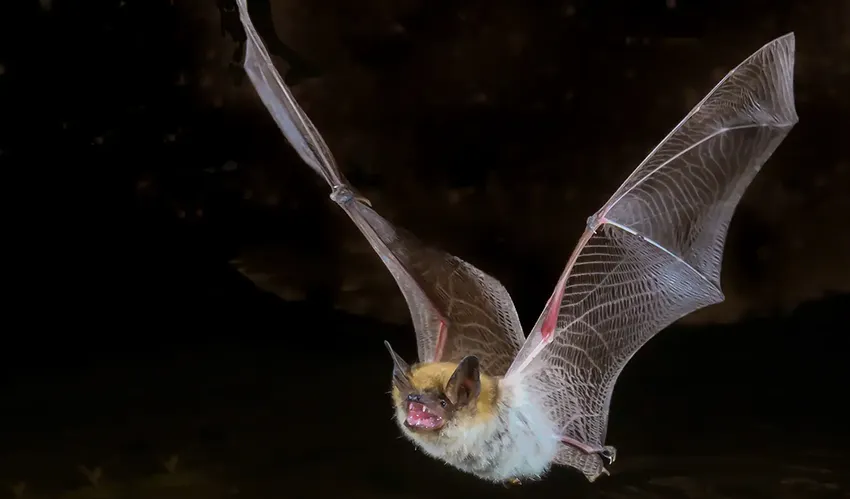
Bats play an important role in the Pacific Northwest ecosystem, helping control insect populations and supporting environmental diversity. They may be beneficial wildlife, but bats can still become a problem when they roost inside homes, attics, barns, or commercial structures.
Understanding the species commonly found in Oregon and Washington can help you recognize their activity early and respond appropriately.
How to Identify Common Bats in Oregon and Washington State
Several bat species are commonly found in the Pacific Northwest, each with slightly different appearances, habits, and preferred roosting locations.
- Little Brown Bat: One of the most recognized bats in the Pacific Northwest, little brown bats are small with glossy brown fur and dark wings. They can be spotted hunting small insects and often roost in attics, sheds, tree cavities, and under loose roofing materials.
- Big Brown Bat: Big brown bats are larger and often heavier. They are commonly found in urban and suburban areas and frequently seek shelter in buildings during colder months.
- Yuma Myotis: Typically found near water sources, Yuma myotis bats feed on insects and may roost in bridges, bat houses, attics, or wall voids. They’re smaller in size and tend to have duller fur colors.
- Silver-Haired Bat: Known for the silver-tipped appearance of their fur, these bats are more commonly found foraging in forests but may occasionally be found near residential properties.
- Hoary Bat: Hoary bats are the largest bat in the area and are usually solitary tree-roosters, instead of being part of a colony. Their name comes from their white tipped fur, and they also have a furry tail unique to hoary and silver-haired bats.
What do Bat Nests Look Like?
Unlike birds or rodents, bats do not build traditional nests. Instead, they gather in protected roosting areas that provide warmth, darkness, and safety.
Common bat roosting locations include:
- Attics
- Wall voids
- Rooflines and soffits
- Chimneys
- Garages and barns
- Hollow trees and bark crevices
Here are some potential signs of an active bat colony to watch out for:
- Piles of small droppings beneath entry points
- Oily marks or dark staining around gaps or vents, where bats may be entering and exiting
- Strong ammonia-like odors from accumulated waste
- Chirping or scratching sounds near dusk or dawn
- Sightings of bats flying near the roofline in the evening
Bat colonies can vary greatly in size. Some species roost alone, while others form colonies containing dozens or even hundreds of bats during warmer months.
Is Having Bats Near Your Property Dangerous?
Bats are generally not aggressive toward humans and prefer to avoid contact whenever possible. However, bats living inside or near structures can create health and safety concerns if not handled properly.
There are a handful of potential issues associated with bat infestations, such as:
- Droppings accumulation, which can damage insulation, create strong odors, and create a risk of fungal spore exposure
- Potential exposure to rabies
- Noise disturbances from roosting colonies
- Bats slipping through gaps into living spaces or attics
Pets may also attempt to interact with grounded or injured bats, which can be dangerous. Direct contact should always be avoided.
Despite these concerns, bats are ecologically valuable and protected animals in many situations. Professional bat control services that utilize humane exclusion and relocation practices are the best solution to protect both the animals and the property owner.
Can Bats be Removed Year-Round?
No, bat removal in Washington and Oregon is influenced by seasonal behavior and wildlife protection laws.
- Spring and Summer: During the maternity season from May to August, female bats gather to raise their young. Young bats are unable to fly for several weeks, so it is illegal for exclusion work to be done during this time to avoid trapping pups inside structures.
- Fall: Fall is often one of the best times for bat exclusion because young bats are mature enough to leave the roost and colonies begin preparing for colder weather.
- Winter: Some species migrate, while others enter periods of hibernation. Bat activity slows significantly during colder months, though bats may still occasionally appear inside structures during temperature fluctuations.
Because timing restrictions can vary depending on the species you’re dealing with and regional regulations, professional inspections are required before any exclusion work begins.
Leave Bat Control to the Professionals
Bat removal requires careful planning, proper timing, and humane exclusion techniques that comply with wildlife regulations. Attempting to remove bats without professional experience can accidentally trap animals inside walls or separate young bats from the colony.
Deep Roots Pest and Wildlife Innovations, LLC provides professional bat inspections, exclusion services, and prevention strategies throughout the Pacific Northwest. Our team understands the seasonal behaviors of local bat species and uses ethical methods designed to protect homeowners and native wildlife.
If you’ve noticed signs of bats around your property, addressing the issue early can help prevent larger infestations and reduce the risk of contamination. Reach out to us today to schedule an inspection for your property.