
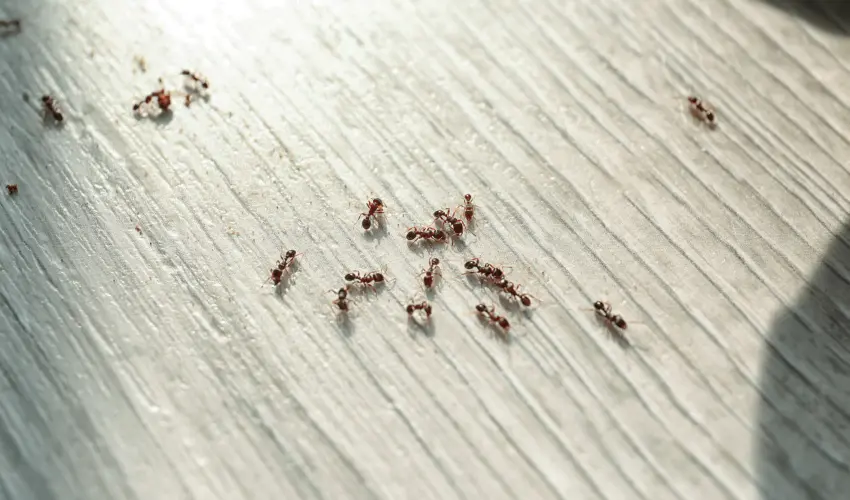
Spotting a trail of sugar ants across your kitchen is a sight that no homeowner looks forward to. They may be small, but a sugar ant infestation can cause large amounts of stress, so it’s important to remove them promptly. To protect your house from ants, take a look at some professional tips and tricks for getting rid of them and preventing them from returning.
What Are Some DIY Methods of Eliminating Sugar Ants?
For large or severe infestations, DIY control is likely not enough. But if you’ve just begun to notice signs of sugar ant activity, taking these steps now can help prevent the issue from spreading.
- Remove potential sources of food. Leaving out crumbs, sugary spills, or pet food is likely to attract ants. If you’ve noticed ants headed for your pet’s bowl, you can also try placing the bowl in a larger, shallow dish of water, to drown the ants that attempt to cross. Even bottles of sugary substances such as syrup can attract ants, so you may need to store them in the refrigerator or a secondary sealed container.
- Thoroughly clean counters and floorboards. Do your best to remove every crumb, and spray white vinegar across all surfaces to disrupt their scent trails. You can also leave lines of baking soda across entry points to deter them from crossing.
- Use natural solutions such as diatomaceous earth. Applying a thin layer of food-grade diatomaceous earth near ant trails and common entry points will dehydrate the exoskeleton of any ants who walk by.
How are Sugar Ants Different From Other Ants?
Sugar ants aren’t a specific species of ants – it’s a term used for many different ant species with similar behaviors. They’re called that because of their attraction to sugary substances such as fruit and candy. This is different from many other ants, which are more attracted to proteins and meats.
Are There Different Types of Sugar Ants?
Yes, the term “sugar ant” is a common name for several species of ants. Here are some of the most common pests people refer to as sugar ants:
- Odorous house ants are identified by their dark black color and foul smell when squished.
- Argentine ants are another species you could be facing, which range from shades of light to dark brown.
- Pavement ants are commonly found on sidewalks, but are also attracted to food and sugary substances.
- Little black ants are dark in color and even smaller than odorous house ants at only 1.5-2 millimeters.
Why do Sugar Ants Return So Often?
If you’ve been fighting off an infestation for a while, you may have noticed that it never seems to end. This is because many treatments only target the ants visibly nearby, which doesn’t remove the source of the problem. Failing to eliminate any of the following could be welcoming sugar ants back into your home:
- A hidden sugar ant colony could be inside your walls, indoor crevices, or nearby the outside of your property. Only removing the ants that wander out doesn’t take care of the larger group of them.
- Scent trails are used by sugar ants to guide the other members of their colony to the source of food they found. Killing ants without wiping down surfaces and attempting to remove these trails will cause ants to keep returning to the same spot.
- Providing easy access to food and water is a common reason that ants keep returning. Without blocking their entry points or removing their ability to find sources of food and water, ants will keep trying to make their way back.
What Happens if You Don’t Remove Sugar Ants?
Ignoring a sugar ant problem is only going to cause more problems down the line. Starting the removal process early prevents destruction of food, surface contamination, and larger infestations. Sugar ant colonies can become extremely large, potentially up to 300,000 to 500,000 ants, so early intervention is extremely important.
Get a Professional Inspection for Your Property
If you’re struggling to keep ants away in your home, you’re not alone. Many species of ants are incredibly persistent and can be difficult to remove, especially when their nests are in hidden crannies. But the good news is you have our team on your side. Our experienced exterminators have extensive experience providing long-term ant control in Vancouver WA and Portland OR – and we’re experts with all manner of household pests, too.
Reach out to Deep Roots Pest and Wildlife Innovations, LLC today to get a professional inspection of your property, and take the stress out of ant removal.